The farmer's creed
The Farmer's Creed highlights the importance of hard work, dedication and a love for the land in the farming industry; perhaps we all need one.
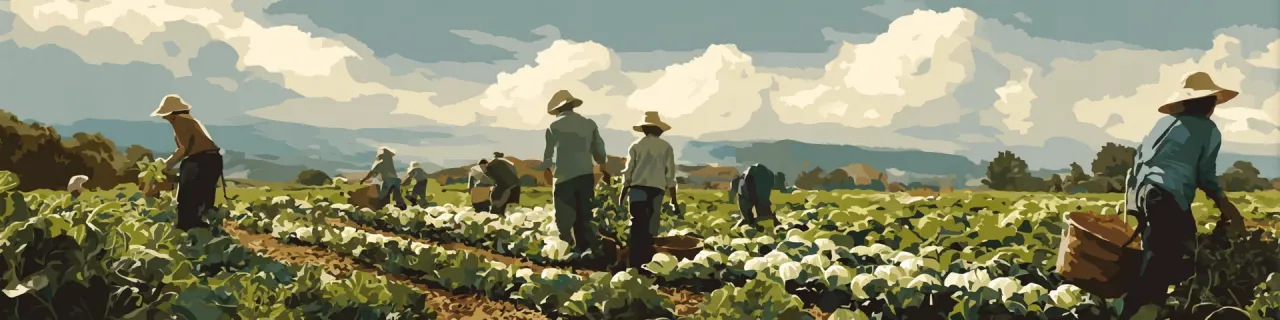
In 1915, a farmer named Frank Mann wrote down what he believed. It wasn't a mission statement crafted by consultants or a set of values workshopped by HR. It was a creed—a declaration of what his work meant and why it mattered.
It has aged better than almost anything written about work since.
The Farmer's Creed
I believe a man's greatest possession is his dignity and that no calling bestows this more abundantly than farming.
I believe hard work and honest sweat are the building blocks of a person's character.
I believe that farming, despite its hardships and disappointments, is the most honest and honourable way a man can spend his days on earth.
I believe my children are learning values that will last a lifetime and can be earned no other way.
I believe farming provides education for life and that no other occupation teaches so much about birth, growth and maturity in such a variety of ways.
I believe many of the best things in life are indeed free: the splendour of a sunrise, the rapture of wide open spaces, and the exhilarating sight of your land greening each spring.
I believe true happiness comes from watching your crops ripen in the field, your children grow tall in the sun, and your whole family feel the pride that springs from their shared experience.
I believe that by my toil I am giving more to the world than I am taking from it, an honour that does not come to all men.
I believe when a man grows old and sums up his days, he should be able to stand tall and feel pride in the life he's lived.
I believe in farming because it makes all this possible.
Read that last line again: "I believe in farming because it makes all this possible."
Not despite the hardship. Because the hardship, the honest sweat, the visible results—these are what make the meaning possible. The dignity isn't added on top of the work. It's built into the structure of the work itself.
This is what most modern work has lost.
The meaning gap
The anthropologist David Graeber wrote about "bullshit jobs"—roles that even the people doing them suspect are pointless. But you don't need to work in an obviously meaningless job to feel the absence of what Frank Mann described.
Consider the structure of farming. You plant seeds. You tend them through drought and storm. Months later, you harvest. You can point to food that exists because of your labour. The feedback loop is complete. The contribution is tangible. When Mann writes "by my toil I am giving more to the world than I am taking from it," he's not guessing. He can see the evidence in his fields.
Now consider the structure of most knowledge work. You attend meetings. You produce documents. You update systems. You align stakeholders. You optimise metrics. At the end of the year, what can you point to? What exists in the world because of your labour? Often, nothing visible. Nothing you could show your children. Nothing that would survive your departure by more than a week.
This isn't a criticism of the people doing the work. It's an observation about how the work is designed. Most jobs have had the meaning engineered out of them—broken into fragments so small that no individual can see the whole, measured by proxy metrics so abstract that nobody can tell if they're actually contributing to anything real.
The farmer knows if the harvest was good. The modern professional often has no idea if their work mattered at all.
Why the creed resonates
There's a reason so many people fantasise about quitting their corporate jobs to open bakeries, start smallholdings, or learn trades. It's not nostalgia for a simpler time. It's a rational response to work that offers no equivalent to watching your crops ripen in the field.
Baking bread has the same structure as farming. You mix ingredients, shape the dough, wait for it to rise, bake it, and at the end you have something real. Something that feeds people. Something you made. The loop closes. The contribution is undeniable.
Most knowledge work never closes the loop. You contribute to a project that contributes to an initiative that contributes to a strategy that may or may not move a number that may or may not matter. The meaning, if it exists at all, is several abstractions removed from anything you can see or touch.
Mann's creed resonates because it describes work where meaning isn't an abstraction. It's not something you have to convince yourself of. It's not something that requires a motivational poster or an all-hands meeting to explain — it's the difference between a poster and values someone actually personifies. It's visible in the field every morning.
What this means for how we work
You probably aren't going to become a farmer. Neither am I. But the creed points to something worth preserving in whatever work you do.
Can you see the results of your labour? If not, can you restructure your work so that you can? The further you are from tangible output, the harder it becomes to feel that your toil gives more to the world than it takes.
Are you learning something real? Mann valued farming partly because it "teaches so much about birth, growth and maturity." Work that doesn't develop you—that just consumes your time in exchange for money—erodes dignity over the years even if it pays well.
Could you explain to your children what you do and why it matters? This is a brutal test. Children have no patience for abstractions. If you can't explain your contribution in concrete terms, that's worth examining.
The farmer's creed isn't a call to abandon modern work. It's a reminder of what work can be when it's structured to produce meaning rather than just output. Mann could stand tall at the end of his days because his work was designed—by nature, by necessity—to be worth doing.
Most of us will have to fight harder for that. Our work isn't structured to provide dignity automatically. We have to engineer it back in, or find it despite the structures around us. That fight is really about staying true to your values when the structures around you don't reward it.
But the standard Mann set remains the right one: when you sum up your days, can you feel pride in the life you've lived?
That question hasn't aged a day.