Your first hire isn't a pair of hands any more
AI now does the tasks a first hire used to take on, so a one-person business needs someone answerable for an outcome first. Here is when to hire them.
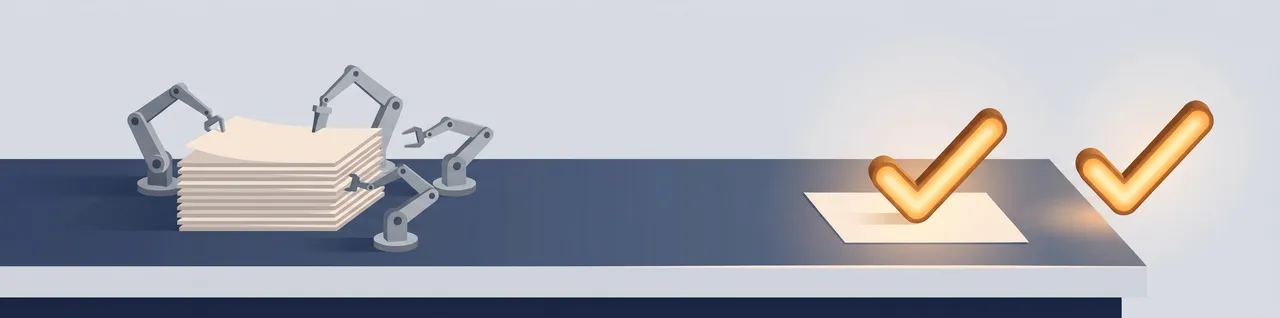
The first person a small business hires has usually been a pair of hands. The owner runs out of hours, so they take on an assistant, a junior or a part-time bookkeeper. The advert may carry a grander title, but the job is to help with everything.
Things look different now. This summer FreshBooks, which sells accounting software, surveyed 500 solopreneurs and owners of very small businesses. It asked what they do when they hit a task they can’t finish alone, and 86% said they try AI before they hire anyone. I think they’re right to. I argued in July that staying small is now a choice, and software costs far less than a salary.
The same survey has a second number in it. Nearly two-thirds, 65%, said that although AI has made them more productive, reviewing its work and checking it for accuracy “can create a risk of ‘AI burnout’”. Put the two numbers together. My reading is that owners have swapped the first hire for a tool, and then taken on the job of checking the tool’s work. That changes what the first hire is for. AI can do the tasks an assistant used to do, but it can’t take responsibility for them. So the first person a one-person business hires should be someone who can take that responsibility. The time to hire them is when the checking takes up more of the week than the owner can spare.
What the checking costs
One survey from a software company proves little, and this one is worded as a risk. A second survey did the arithmetic. Foxit, which makes PDF software, published research in March covering 1,000 office workers in Britain and America. They said AI saved them 3.6 hours a week. They also said they spent 3 hours and 50 minutes reviewing what it gave them. They ended up 14 minutes worse off.
Both surveys come from companies with software to sell, and both record what people say about themselves. I wouldn’t lean on either alone, but they point in the same direction.
Why does the checking cost so much? A junior employee will usually tell you when they’re unsure. “I wasn’t certain about the VAT on this one,” they say, so you look at that invoice and trust the rest. AI rarely does that. A wrong answer arrives looking as finished as a right one, so you can’t tell which ones to check.
In a larger business that work is shared across a team. In a one-person business it has one place to go. Every draft, quote, reconciliation and customer reply comes back to the owner.
Last week I wrote about why reviewing AI output is the worst job an owner can give themselves. The more reliable a system becomes, the worse we get at catching its mistakes, and many of our approvals exist only to make us feel in control. My advice was to turn the checks that matter into rules and to drop the ones that are there for comfort. That still comes first. What remains afterwards is the checking that needs judgement. Is this quote right for this client? Does this figure look wrong? Rules can catch some of that, but someone still has to decide. In a solo business that someone is always the owner.
What the first hire is for now
The old question was “what can I hand over?” AI can now take a good share of that. The new question is “what can someone else be responsible for?”
Michael Gerber’s E-Myth shaped how I ran Vertical Leap, from 2001 until I sold it. Gerber calls the hands-on work of a business technician work, and the first hire used to take some of it off the owner. Now AI can take much of it. The owner becomes a full-time manager of software instead, which few of us planned.
The hire who frees you is someone who can run one part of the business without you. Take the books. A person who is responsible for them decides how the accounting software and the AI are set up, and checks the month-end themselves. They come to you with the two things they can’t settle, which might be a client who is paying late and a cost that looks wrong. The routine work stops reaching your desk.
Now imagine you had hired someone only to check the AI’s output. They would send you every reconciliation with a tick on it. If the final say stayed with you, you would read them all anyway. You would have the same queue as before, with a salary attached. I warned in June that the senior hire an overwhelmed owner reaches for is often a process failure in disguise, and this is how it happens. The person has to be responsible for the result, with the authority to change how the work gets done.
The books are only one example. It could be a group of clients, or every quote that leaves the business. In each case the person is likely to be more senior than the assistant we used to hire, and to work fewer hours.
When to hire, and who
There is a simple test. Add up the hours you spent last week reviewing and correcting AI’s work. Count the drafts you read, the figures you checked twice and the replies you rewrote.
My rule of thumb is a day a week. If the checking still takes that long after you’ve fixed the processes that cause rework and dropped the approvals that were only there for comfort, start hiring. The second sign is worse. You notice an area of the business you’ve stopped checking properly, because you can’t keep up.
I don’t know how long this will last. The tools improve every few months, and the checking may shrink as the models make fewer mistakes. I can’t yet tell whether it will shrink enough to change the decision. For now it sits on our desks.
Who should you hire? Often it won’t be an employee at first. A part-time finance director can be responsible for the numbers. A senior account manager, in for two days a week, can be responsible for a set of clients. Either way you get someone responsible for a result, without paying for hours of routine work the AI already does. Earlier this month I made the case for building a fractional bench by design. A one-person business is where it applies most.
An employee is a bigger step, and most British businesses don’t have one. Government figures published this month count 5.6 million private-sector businesses in the UK. Of those, 4.1 million, or 74%, employ nobody but their owners. I think cost is less of a barrier than it looks. As a rough illustration, a full-timer on £26,000 costs about £27,000 a year once pension contributions and insurance are added. For an eligible employer, the £10,500 Employment Allowance covers the National Insurance on a salary that size. Recruitment and equipment come on top, and a senior person costs more, which is one reason to buy fewer of their hours. The harder part, I’d say, is deciding what the person is for.
So start there. If checking took a day or more of your week, write down the one result you’d most like someone else to be responsible for. The job description begins there. Hire the person who can take it on, and you’ll no longer be the only one in the business who cares whether the work is right.