America's energy innovator's dilemma: when success becomes your biggest vulnerability
The US is falling into the same trap that killed Kodak and Blockbuster — but this time it's happening at a national level with renewable energy.
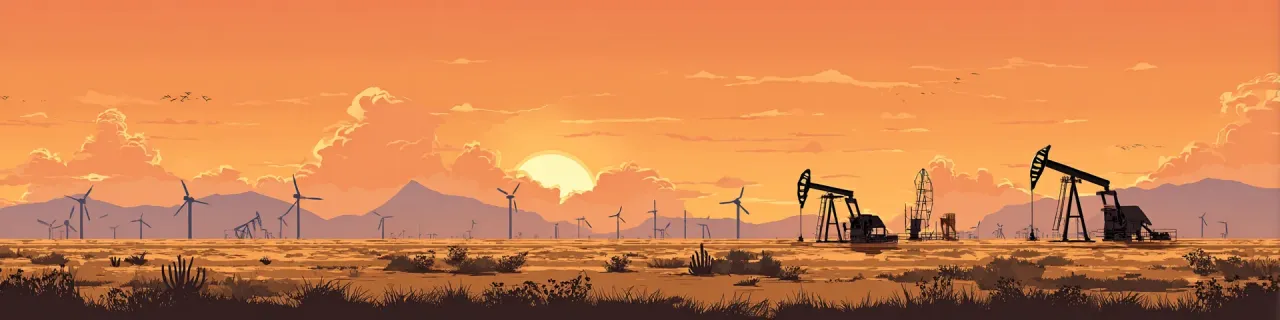
I’ve watched enough successful companies die to recognise the pattern. They weren’t stupid. They weren’t lazy. They simply couldn’t escape the gravitational pull of their own success. Reading Paul Krugman’s latest analysis of America’s renewable energy failure, I realised I was watching the same story play out — but this time on a national scale.
The parallels are uncanny. And for business leaders, the lessons are impossible to ignore.
The Krugman wake-up call
Let me share what stopped me in my tracks from Krugman's piece. China's largest solar farm covers 162 square miles — seven times the area of Manhattan. Meanwhile, the Trump administration just killed America's attempt to build something similar in Nevada. But here's the kicker: this isn't just about politics. It's about a deeper structural problem.The numbers tell a stark story:
- Europe generates over 40% of its electricity from renewables
- China dominates both production and growth in renewable energy
- America sits in distant third place, actively dismantling renewable projects
The innovator's dilemma, national edition
Here's what I've learned from watching companies fail: success creates its own trap. Clayton Christensen called it the innovator's dilemma. Successful companies focus so intently on optimising their existing business that they miss the disruption coming for them.Kodak invented digital photography but couldn’t abandon film. Blockbuster saw Netflix coming but couldn’t give up late fees. Nokia dominated mobile phones until smartphones made them irrelevant.
Now watch America do the same thing with energy.
The success trap
Let me be clear: it makes perfect sense for America to continue leveraging fossil fuels. They're profitable. They provide jobs. They ensure energy independence. In business terms, fossil fuels are America's cash cow — and you'd be mad to abandon a cash cow that's still producing.The US has everything that makes the innovator’s dilemma inevitable:
A wildly successful incumbent technology. Fracking transformed America into a net energy exporter. Why change what’s working? The fossil fuel sector is massive, politically powerful, and — crucially — still profitable. Entire states depend on oil and gas jobs. You don’t kill that overnight.
Metrics that favour the old model. Energy independence? Achieved. Cheap petrol? Sorted. Quarterly earnings for energy companies? Strong. By every traditional measure, American energy policy is succeeding. The quarterly reports look fantastic.
Customers (voters) who want the existing product. As Krugman notes, opposition comes from both sides — right-wing culture warriors and left-wing NIMBYists. Texas ironically leads in wind power whilst blue states like New Jersey cling to fossil fuels.
Sunk costs that feel impossible to abandon. Trillions invested in pipelines, refineries, and infrastructure optimised for fossil fuels. Walking away feels like admitting defeat.
Here’s the trap though: the innovator’s dilemma isn’t about abandoning your cash cow. It’s about failing to invest in what will replace it. Smart companies milk the cash cow whilst building the future. They use profits from the old business to fund the new disruption.
America isn’t doing that. It’s not just favouring fossil fuels — it’s actively blocking renewables. That’s like Kodak not just continuing to sell film, but banning digital cameras from their R&D labs.
The disruption America can't see
Whilst America optimises yesterday's energy system, China and Europe are building tomorrow's. The pattern is textbook:- China controls solar panel, wind turbine, and battery production
- The world's most ambitious renewable projects are in China, not America
- Europe proves renewables can power modern economies
The Trump administration isn’t just ignoring renewables — it’s actively hostile. They’re studying “adverse health impacts” of wind farms. They’re cancelling solar projects mid-development. It’s like watching Blockbuster not just keep their stores open (sensible), but actually ban employees from mentioning Netflix (suicidal).
What makes this worse than corporate failure
When Kodak died, Fujifilm and digital natives took over. When Blockbuster collapsed, Netflix filled the gap. Creative destruction works — for companies.But countries can’t just declare bankruptcy and start over. There’s no venture capital for nations. No acquisitions to bail you out.
More importantly, as Krugman points out, this isn’t just about economics. It’s about ceding leadership in the 21st century’s defining technology to China. Imagine if America had opted out of the internet revolution because we had really good telephone networks.
The business lesson: recognising your own disruption
I've sat in enough boardrooms to know how this happens. The quarterly numbers look good. The existing business has momentum. The new technology seems expensive, unproven, "not ready for prime time."By the time the disruption is obvious, it’s too late.
Here’s what I’ve learned about avoiding your own innovator’s dilemma:
Watch where the talent is going. The best engineers aren’t joining oil companies — they’re working on batteries and solar efficiency.
Look at exponential improvements. Solar and battery costs have plummeted 90% in a decade. When you see that curve, disruption is coming.
Notice who’s not your customer yet. Entire nations are building energy systems without American technology or expertise.
Question your metrics. If you’re winning by yesterday’s scoreboard, you might be losing tomorrow’s game.
The takeaway
America's renewable energy failure isn't just bad policy — it's a masterclass in how success blinds organisations to disruption. The same dynamics that killed Kodak are now playing out in American energy policy.But here’s what’s crucial: the answer isn’t to shut down oil wells tomorrow. That would be like Kodak stopping film production in 1990 — business suicide. The answer is to use fossil fuel profits to fund renewable leadership. To be both the incumbent and the disruptor. To run two races simultaneously.
For business leaders, the lesson is clear: your biggest vulnerability isn’t competition or technology or changing markets. It’s the success that makes you believe you don’t need to change whilst you’re still winning.
The companies that survive disruption are the ones that disrupt themselves first. They cannibalise their own products before someone else does. They invest in technologies that threaten their existing business whilst that business is still strong. They measure tomorrow’s success, not just yesterday’s.
Think of it this way: you don’t stop marketing your cash cow product. You milk it for everything it’s worth. But you use those profits to build what will replace it. Because if you don’t disrupt yourself, someone else will do it for you.
The alternative? Ask Kodak. Ask Blockbuster. Or in a few years, ask America how it felt to win the fossil fuel game whilst losing the energy future.